
Types of Aerosol Valves and How to Choose the Right One for Your Product
I've noticed that many brands fail not because of their product formulation but because they selected the wrong types of aerosol valves. When you experience unexpected product leakage, poor spray performance, or inconsistent dosing on the production line, the culprit is rarely the liquid inside the can.
In my experience working with aluminum packaging and navigating strict FEA (European Aerosol Federation) standards for over 50 years, I've learned a critical truth: an aerosol valve is not just a basic packaging component it is the master controller of your entire delivery system. I want to walk you through how to navigate these choices successfully so you can prevent costly manufacturing mistakes.
What You'll Find:
• Why aerosol valves act as system drivers rather than basic components
• The primary and advanced aerosol valve types available for diverse applications
• A 5-step framework to choose the right aerosol valve for your specific formulation
• An executive-level performance comparison for industrial and manufacturing decisions
• Common selection mistakes and how your supply chain team can avoid them
What Is an Aerosol Valve and Why It Controls Product Performance
Most competitors and procurement teams treat valves as simple caps or closures. I need to reframe this for you right now: a valve is a highly engineered precision engine.
What an aerosol valve actually does in the packaging system
At its core, the valve regulates the entire user experience. It controls the flow rate, manages the pressure release, and ensures product delivery consistency. According to engineering fundamentals detailed on ScienceDirect (2024), an aerosol valve operates as a complex mechanical assembly where the liquid phase and propellant interact perfectly the moment the valve opens. It holds the pressure inside the aerosol cans safely while allowing for the controlled release of the product on demand.
How aerosol valves interact with key components
Understanding how valves work requires looking at the broader system. The valve does not act alone; it interacts directly with:
Actuator: The button the consumer presses, which dictates the final spray characteristics.
Dip tube: The plastic tube that pulls the product from the bottom of the can up into the valve body.
Propellant: The pressurized gas that provides the force needed for dispensing.
Sealing cup: The metal component that keeps the valve assemblies securely crimped and attached to the can, maintaining pressure.
Why valve design directly impacts your product
The internal design of your chosen valve dictates spray pattern quality. Whether you need fine mist sprays or a heavy foam, the right aerosol valve ensures the formulation exits in the desired form. This integration plays a critical role in minimizing waste and guaranteeing a premium consumer experience. If the flow is too heavy, you create product waste; if it's too weak, the user gets frustrated.
For R&D teams: Why valve selection must start early
If you are on an R&D team, valve selection must start before your formulation is fully finalized. Waiting until the end of the development cycle leads to system mismatches. Formulations change viscosity and chemical behavior when pressurized, meaning your valve selection is non negotiable for maintaining optimal performance.
Main Types of Aerosol Valves Explained with Real Applications
When I help companies design their aerosol products, I start by evaluating the three main categories of valves. Each serves a distinct purpose across various industries.
Continuous spray valves
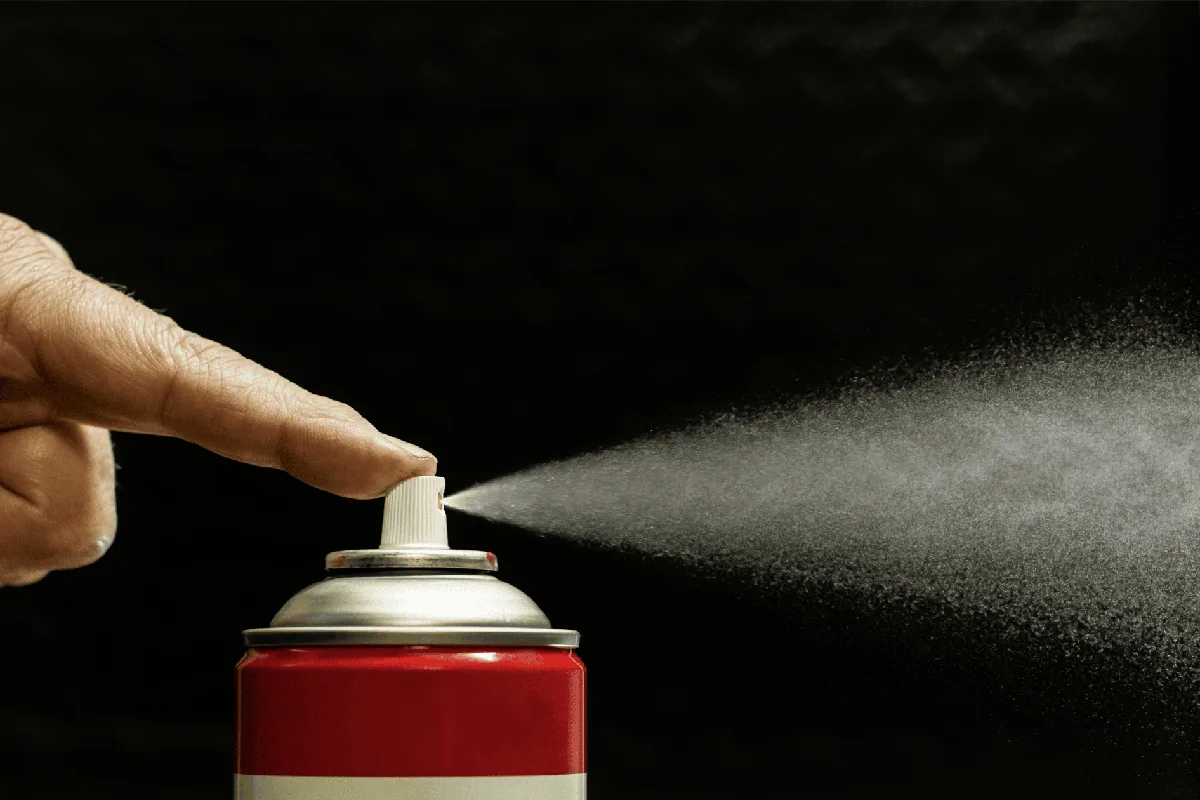
Standard valves, often referred to as continuous valves, dispense product for exactly as long as the actuator is pressed down. They are the backbone of continuous spraying applications. In my experience, these upright valves are best suited for personal care products like hair sprays, deodorants, and air fresheners, as well as household cleaners. How do they work? Pushing the actuator opens the seal, and the propellant forces the liquid up the dip tube continuously. The main limitation is that there is no dosage control, meaning there's a higher risk of reducing overspray efficiency if consumers apply too much.
Metering valves
For precise dosing, metered dose valves are the absolute standard. Instead of a continuous flow, these valves utilize a small internal chamber that dispenses an exact amount or measured amount of product per press. When I reviewed pharmacological research from the National Center for Biotechnology Information (NCBI) (2023), it became clear that metered dose inhalers, pharmaceutical aerosols, and specific medical sprays rely exclusively on these mechanisms. They ensure strict safety requirements and precise dosage are met for respiratory devices and other medical applications. The trade-off is a higher unit cost due to the complex internal engineering.
Tilt valves
Instead of pressing straight down on an actuator, tilt valves activate when the nozzle is pushed at an angle. I find them excellent for dispensing products in hard to reach areas. They are highly popular in specific household products and industrial cleaners. However, they come with design constraints regarding the types of actuators they can accommodate. For procurement managers, comparing the cost effectiveness and functionality of tilt valves versus standard continuous spray valves is a critical early-stage decision.
Advanced Aerosol Valve Variations Most Suppliers Don’t Explain
Beyond the standard options, there are advanced aerosol valve types that expand what your packaging can do. I want to highlight a few variations that most suppliers gloss over.
360-degree valves
Standard valves require the can to be held upright. 360-degree valves (often utilizing a special weighted dip tube or bag system) allow the user to spray at any angle even completely upside down. I highly recommend them for industrial lubricants, automotive sprays, and medical products where the user cannot always hold the can perfectly vertical.
Bag-on-valve (BOV) systems
In BOV systems, the formulation sits inside a sealed bag inside the aluminum can, physically separated from the compressed air or nitrogen propellant. This allows for dispensing sensitive products in their purest form. The benefits of bov systems are massive: extending shelf life, maximizing product integrity, and achieving up to 99% product emptying, which dramatically reduces waste. Because the propellant never touches the product, BOV is highly preferred for clean personal care lines, sunscreens, and food products. While they carry a higher upfront cost, the reliable performance and consumer appeal often justify the investment.
Female vs male valve systems
This distinction lies in the valve body and stem location. In a male valve, the stem protrudes from the can, and the actuator sits on top of it. In a female valve, the stem is built into the actuator itself, fitting down into the valve body. Ensuring compatibility between your actuator and your valve type is crucial. I've seen product developers make common sourcing mistakes here, ordering incompatible parts that halt production lines for weeks.
How to Choose the Right Aerosol Valve for Your Product Step by Step
To make this actionable, I want to give you the exact framework I use to ensure the right valve is selected for any formulation.
Step 1: Define product viscosity and formulation behavior
Thick gels, sticky resins, and thin liquids require entirely different valve types to function properly. A high-viscosity product will clog a standard valve designed for a fine mist.
Step 2: Determine spray pattern requirements
Do you need a fine mist, a powerful stream, or a rich foam? Fine mist sprays require specific micro-orifices in the valve and actuator. Your choice here directly impacts consumer perception of quality.
Step 3: Evaluate dosage control needs
Decide if your aerosol products require the controlled release of a precise dosage (metering valves) or the user-controlled freedom of continuous spraying. If safety is a concern, metering is required.
Step 4: Consider packaging orientation
Will the consumer use this product upright, inverted, or from multiple angles? This dictates whether you need standard upright valves or an advanced 360-degree solution.
Step 5: Align with production and cost constraints
Evaluate minimum order quantities (MOQs), scalability, and supplier capabilities. Procurement teams should use this checklist to avoid costly valve mismatches, ensuring the selected technology fits within the required unit economics.
Performance Comparison of Aerosol Valve Types for Industrial Use
When I look at valve selection from a manufacturing standpoint, I find it incredibly helpful to visualize the trade-offs. Here is a performance matrix for industrial settings and business decision-makers.
Aerosol Valve Type Comparison for Manufacturing Decisions
| Valve Type | Cost Level | Spray Control | Best Application | Limitations |
| Continuous Valves | Low | User-dependent | Personal care, household products | No dosage control, higher potential waste |
| Metered Valves | High | Extremely precise | Pharmaceuticals, medical applications | Higher cost, complex assembly line needs |
| Tilt Valves | Medium | Directional | Industrial applications, heavy cleaners | Actuation can feel less intuitive to some |
| Bag-on-Valve | High | Continuous, 360° | Sensitive products, pure liquids | Requires specific dual-stage filling equipment |
Performance factors to monitor
In industrial applications, flow rate consistency, high pressure tolerance, and leakage risk are the primary performance factors. A heavy-duty industrial lubricant requires a robust valve that won't degrade under harsh chemical exposure.
Executive impact
For executives, remember that valve selection directly impacts product returns, brand perception, and long-term costs. Choosing a cheaper valve that leaks or clogs destroys your profit margin and consumer trust much faster than investing in consistent performance upfront.
Common Mistakes When Selecting Aerosol Valves and How to Avoid Them
I've observed several critical implementation errors over the years. Knowing these will save you significant time and resources.
Choosing based on price instead of performance
I constantly see brands opt for the cheapest valve assemblies, only to face massive retail recalls due to leakage. The right valve ensures long-term cost effectiveness by protecting the product and preventing returns.
Ignoring compatibility with formulation
Certain active chemicals can degrade the standard plastic, rubber gaskets, or metal used inside the sealing cup. Always run compatibility tests to check for chemical reactions, gasket swelling, and clogging.
Overlooking actuator and valve integration
This is a critical system mismatch. If the actuator doesn't perfectly fit the valve stem, you will experience sputtering, dripping, or zero spray. This precise integration is what guarantees optimal spray characteristics.
Not testing under real production conditions
A valve might perform perfectly when hand-filled in an R&D lab, but mass production introduces different pressures, speeds, and crimping forces. Supply chain teams must validate suppliers and test valves under high-speed line conditions before committing to full-scale production.
Final Thoughts on Selecting the Right Aerosol Valve for Long-Term Success
What I want you to take away from this is that aerosol valve selection is a strategic business decision—not a minor technical detail. The valve you choose acts as the gateway between your formulation and your customer, determining performance, safety, and brand reliability.
Future trends in packaging are pushing heavily toward sustainability, advanced precision dosing, and compressed air systems to replace traditional propellants. According to the structural guidelines and sustainability initiatives published by Aerosol.org (2024), adapting to these changing standards by working with experienced packaging manufacturers is vital for long-term compliance and market success.
With deep expertise in aluminum packaging and precise aerosol systems, I know that aligning your formulation with the perfect valve geometry is the key to minimizing waste and maximizing consumer satisfaction. If you want to ensure your next product launch features flawless, reliable performance, I encourage you to contact the team at New Red & White to discuss your specific aerosol system requirements today.
Frequently Asked Questions
What is the most cost-effective aerosol valve for a standard liquid product?
For standard liquids like air fresheners or basic hair sprays, standard continuous spray valves are the most cost-effective option. They provide reliable performance for everyday use, though you will need to ensure the internal gasket material is chemically compatible with your specific liquid formulation before mass production.
What is the exact difference between a continuous valve and a metered valve?
A continuous valve allows the product and propellant to flow out of the can without interruption for as long as you hold down the actuator button. In contrast, a metered valve fills a small, internal measurement chamber and only releases that specific, exact amount of product per press, regardless of how long you hold the button down.
If I want to switch to a Bag-on-Valve (BOV) system, what do I need to prepare?
If you are transitioning to BOV systems to extend shelf life or use eco-friendly compressed air, you must verify that your contract manufacturer has the specialized dual-stage filling equipment required for BOV. You will also need to adjust your unit cost projections, as BOV components carry a higher upfront cost compared to traditional dip-tube aerosol setups.
Read more: Selecting the Right Aerosol Can Supplier for Improved Packaging Performance and Brand Growth